
Knurrix knowledge
IGP and IFH tracking compared
## IGP is a regulated working dog sport IGP is an internationally regulated working dog sport. A complete IGP trial consists of tracking, obedience and protection work. The three phases test different abilities but belong to one training concept: the dog should be willing to work, responsive to control and resilient without losing independence or motivation. Responsible development takes time, fair progression and appropriate guidance. Trial rules define the formal framework. Daily training must translate that framework into exercises suited to the individual dog’s age, experience, physical condition and mental readiness.
Updated 9 September 2026
Geprüft aus aktiver IGP- und IFH-Fährtenpraxis
In this article
- Tracking is phase A
- Obedience and protection remain separate disciplines
- IFH places tracking at the centre
- Keep training and trials distinct
- Current rules remain the binding reference
- Progress is larger than a score
- Knurrix records rather than decides
- Separating training, trials and everyday practice
- What a beginner can record
- Questions for a useful training review
Tracking is phase A
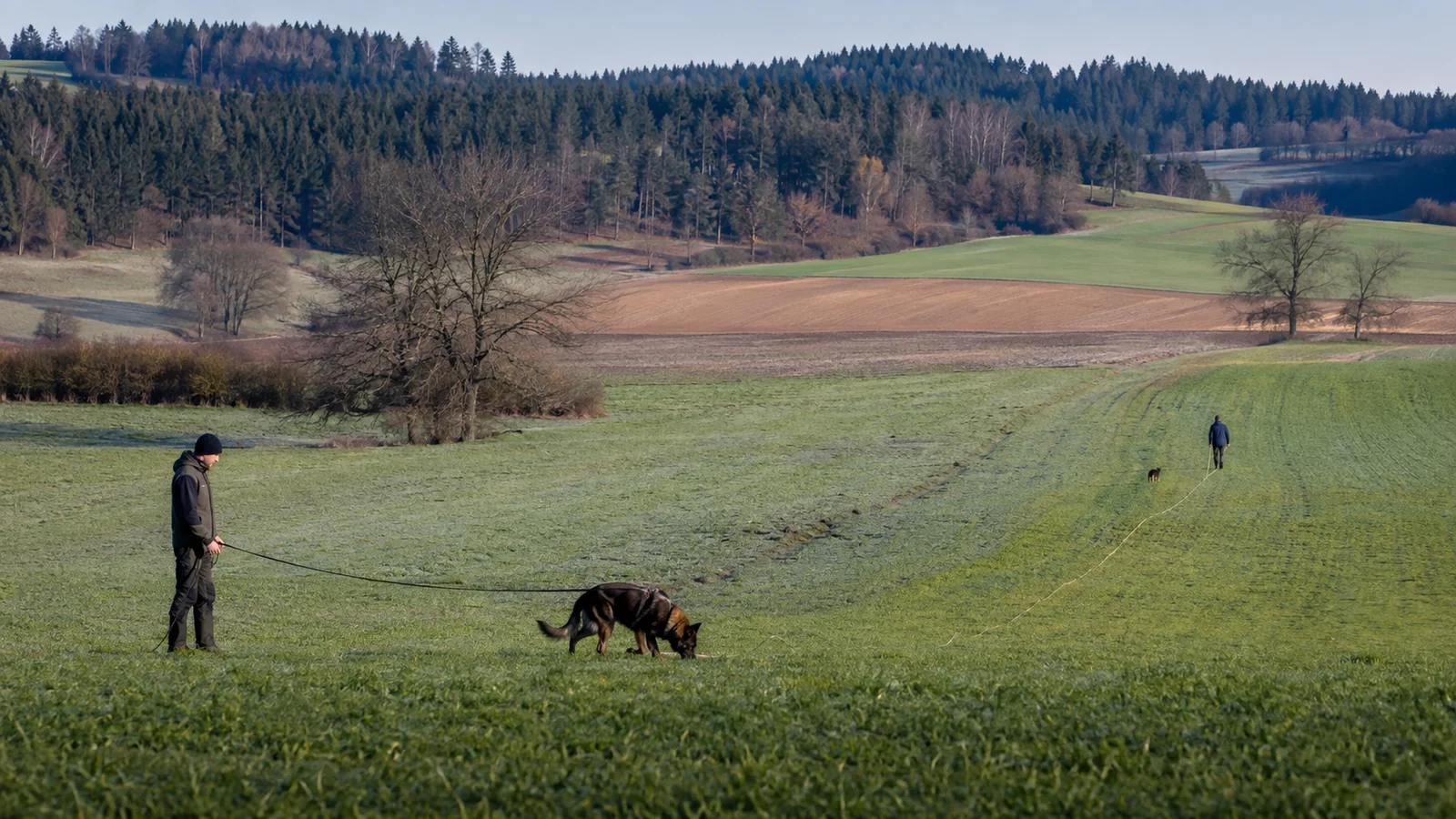
In tracking, the dog follows a human-laid trail and indicates placed articles. Distance, age, number of legs, changes of direction and articles differ by level. A trial does not only ask whether the dog reaches the end. The quality and continuity of the work matter. Training does not need to increase every component together. A team may focus on the scent pad, one kind of corner, article indication or sustained concentration. A recorded training session is therefore not automatically equivalent to an official trial track.
Obedience and protection remain separate disciplines
Obedience contains defined exercises that demonstrate cooperation, precision and responsiveness. Protection work within IGP concerns controlled behaviour in a strict sporting framework; it is not uncontrolled aggression training. Suitable conditions, qualified guidance and reliable control are essential. This distinction matters on a website focused on tracking because IGP should not be reduced to one phase. Knurrix provides detailed GPS-based review for tracking while its diary, goals and trial records can place that work within the broader development of the dog-and-handler team.
IFH places tracking at the centre
IFH refers to dedicated tracking trials in which scent work itself is the central discipline. Depending on the level, tracks may be longer, older or more geometrically demanding, and additional elements such as cross-tracks may be included. IFH is not simply “more IGP tracking”. The current rulebook defines the exact structure and assessment. Training still begins with the dog’s present skill. Distance alone does not create quality. Concentration, endurance, article work, independent problem-solving and stability across changing conditions develop gradually.
Keep training and trials distinct
A trial requires a specified structure and formal assessment. Training should be more targeted. A short exercise containing one difficult article may be more useful than a complete long track. An easy confidence-building track after a demanding session may be exactly the right choice. Treating every session as a trial can prevent individual skills from being developed cleanly. Ignoring trial requirements altogether may leave gaps that only appear close to an entry. A useful record therefore separates the training objective, actual structure and intended level.
Current rules remain the binding reference
Rules are revised and national organisations may apply supplementary provisions. Figures for minimum age, track length, ageing time, articles or scoring should not be copied from an old article without checking. The current FCI rules together with applicable national provisions are the authoritative sources. A knowledge article can explain vocabulary and context, but cannot replace the rulebook. Knurrix shows sources and review dates so readers can see the basis of an explanation and recognise when a fresh check is required.
Progress is larger than a score
Development appears in details: how independently the dog accepts the scent pad, whether rhythm remains stable over longer legs, how different corners are solved, whether articles are indicated calmly, and how much the line handling influences behaviour. Linking these observations with route and conditions makes them retrievable. Several comparable sessions provide a more reliable picture than one score. Trial success may be a goal, but responsible training also considers health, motivation, recovery and the individual pace of learning.
Knurrix records rather than decides
Knurrix can bring structure, GPS routes, articles, weather, ground, notes and trial goals together. That protects memory and makes patterns easier to examine. The app does not replace a trainer or judge and does not automatically declare a dog trial-ready. Interpretation remains a human responsibility. Help, interruptions and difficult moments belong in the diary alongside confident work. The result should be a useful training record, not a digital display case.
Separating training, trials and everyday practice
IGP training does not consist only of complete trial routines. Skills can be developed separately: a calm start, deep work on a straight leg, a particular corner or an unambiguous article indication. They are connected under increasing difficulty once the components are stable. A trial, however, follows the current rules, entered level and instructions given on the day. Anyone using a rulebook should check its edition and validity. Knurrix can document construction and observations, but it does not decide whether work complies with rules or predict a judge’s score.
What a beginner can record
Early training notes need only a few clear details: objective, surface, actual ageing time, length, directional changes, articles and assistance. Add how the dog approached the start, whether its working rhythm remained stable and where it found an independent solution. Finish with one sentence about the next session. This avoids both extremes: collecting scores without a learning aim and relying on vague memories such as “it went quite well”. The result is a training history that handler and trainer can discuss together.
Questions for a useful training review
Four questions help after a session: What was the intended task? What conditions were actually present? What did the dog solve without help? What will change next time? Answers should identify concrete moments rather than only giving an overall impression. A trainer also needs to know what the handler knew during the work. Someone who laid the track reads movement differently from a person who does not know the route. Both arrangements can be useful, but they should not be compared without noting the difference. Trial-oriented sessions additionally require the correct construction, equipment and current rules. Persistent stress, overload or possible health concerns need attention from an appropriate professional, not an automatic app score.